In the NBA, where salary cap rules shape every negotiation, the most consequential decisions are often made not by players or teams, but by the people who operate between them: player agents. Agents negotiate contracts, manage relationships, and, at times, push the boundaries of what the league permits. They owe their clients a fiduciary duty and frequently serve as the player’s public and private voice. But that dynamic raises a difficult governance question. When an agent pressures a team, solicits improper benefits, or orchestrates a scheme that violates league rules, how responsible is the player for the conduct of his agent? If an agent crosses a line in pursuit of leverage or compensation, is the player merely a beneficiary of that pressure, or does his representative’s conduct implicate him as a participant?
The Asymmetry Problem
The NBA’s compensation system rests on a structural distinction: teams are the regulated economic actors, and players are the labor they compensate. That division shapes how the league writes its rules, how it enforces them, and how it assigns responsibility when those rules are broken. The salary cap system is designed to preserve competitive balance, prevent wage inflation, and ensure that superstar compensation is constrained by collectively bargained limits rather than unbounded market forces. To protect that system, the CBA prohibits off‑book compensation, promises of future payment, team‑provided business opportunities, and any inducements or benefits outside the Uniform Player Contract.
Within this architecture, the CBA’s circumvention rules are drafted as prohibitions on teams, not players. Article XIII forbids teams from providing anything of value outside the contract, from initiating or facilitating business opportunities for players, and from entering into—or even attempting—improper agreements. While players and their representatives appear throughout the text, the actionable violations that trigger penalties are overwhelmingly framed around team conduct: agreements the team enters, actions the team undertakes, or transactions the team facilitates. The drafting assumes that the team is the actor capable of creating circumvention structures and therefore the entity responsible for preventing them.
Article XIII also treats agents as extensions of the player. Their conduct is treated as player conduct, but agents themselves are not governed by the NBA. Section 3(c) makes this explicit: when an agent violates the circumvention rules, the NBA cannot discipline the agent directly. Instead, the NBPA—the body responsible for certifying agents—must impose discipline. Because the league lacks regulatory authority over agents, Article XIII imposes team‑side compliance duties in response to agent conduct. If an agent solicits improper benefits, the team must refuse, resist, and report the solicitation. Failure to do so is a team violation.
The penalty structure reinforces this allocation of responsibility. Section 3 authorizes multi‑million‑dollar fines, forfeiture of draft picks, voiding of contracts, and suspension of team personnel—sanctions aimed at teams. Players are only fined or sanctioned when both the player and the team are found to have violated the rule together, and even then, the player penalty is capped at $350,000, while team penalties reach $7.5 million and include draft pick forfeiture.
The asymmetry is intentional. It reflects the CBA’s core philosophy that teams are the gatekeepers of compliance. Article XIII assumes that teams control compensation structures, that teams have the capacity to resist improper solicitations, and that teams are the entities whose conduct threatens competitive balance. The CBA regulates employers, not employees. Players are labor; teams are institutions; and institutions are the only entities the NBA can meaningfully regulate.
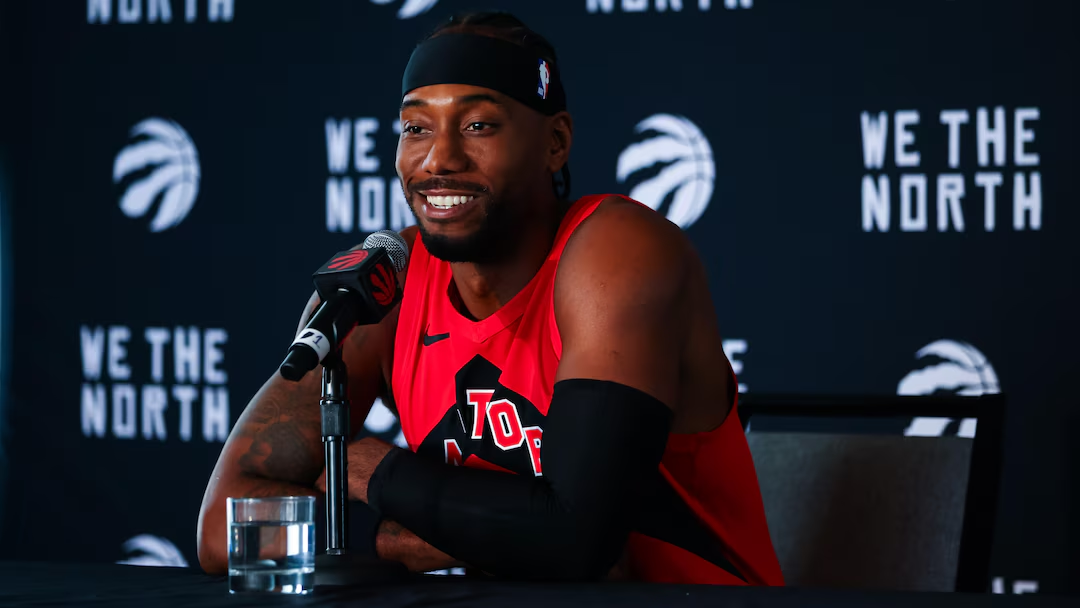
This is why, even though Kawhi Leonard—through the actions of Dennis Robertson—violated the circumvention rules, the NBA treated the Clippers as the responsible party. Kawhi solicited improper business dealings; the Clippers designed and facilitated the scheme. Under the CBA’s architecture, teams—not players—bear the consequences of circumvention unless the player personally orchestrates the violation. The result is predictable: the Clippers lost draft picks, executives, and millions in fines, while Leonard paid only restitution.
The Boundary of Player Responsibility
The clearest historical example of salary cap circumvention remains the 1999 Joe Smith scandal. Smith and his agent, Eric Fleisher, entered into a covert arrangement with the Minnesota Timberwolves designed to evade the cap system. Lacking the space to sign Smith to a market value contract, the parties constructed an illicit workaround: Smith would accept a series of one‑year, below‑market deals worth roughly $1–2 million each, and in return the Timberwolves secretly promised him a future long‑term contract exceeding $80 million once the team acquired his Bird rights. None of these future terms were disclosed to the league, placing the arrangement in direct violation of Article XIII.
The NBA’s response was sweeping. Minnesota forfeited five first‑round draft picks, paid a $3.5 million fine, and saw general manager Kevin McHale suspended. Smith’s punishment, by contrast, was limited to the voiding of his contract, the loss of the promised future deal, and immediate free agency status. He was neither suspended nor fined. Even though Smith knowingly participated in the scheme, the league did not treat him as the primary violator. The enforcement philosophy was unmistakable: the team orchestrated the circumvention, so the team must bear the consequences. Smith’s case established the modern contours of circumvention enforcement—players may benefit from agent‑driven misconduct, and they may even knowingly participate, but unless the player personally designs or negotiates the illegal structure, the league directs its sanctions toward the institution, not the individual.
Kawhi Leonard’s case represents the modern, more ambiguous version of this dynamic. Leonard violated the salary cap rules through the conduct of his representative, Dennis Robertson, who pressured the Clippers to secure approximately $10 million per year in off‑court income for Kawhi. Robertson directed these demands at Steve Ballmer, Gillian Zucker, and Lawrence Frank. Leonard ultimately received $18 million in endorsement payments from Boingo, Daktronics, and Lockton—deals the Clippers initiated, facilitated, and induced through quid‑pro‑quo business arrangements. The team also covered personal expenses for Leonard and his representatives that were not permitted under league rules.[1] These are violations. But they are derivative violations—the product of pressure applied by Leonard’s representative and opportunities created by the organization.
What matters more than what Leonard did is what he did not do. Leonard did not negotiate the endorsement deals, induce the companies to enter them, coordinate the consulting contracts, design the quid‑pro‑quo structure, or orchestrate the circumvention scheme. Those actions were attributed to Clippers executives and ownership. Leonard’s conduct was improper, but it was not architectural. He was a beneficiary of a scheme designed and executed by the organization, not its engineer.
The NBA’s sanctions reflect this distinction. Leonard was ordered to pay $700,000 in restitution—the disgorgement of improper benefits—but he was not suspended or fined. The Clippers, by contrast, forfeited five first‑round picks, were fined $30 million, and received sweeping suspensions to high‑level staff members along with organizational sanctions and compliance monitoring. The asymmetry mirrors the Joe Smith precedent: players are insulated unless they personally orchestrate the misconduct.
Leonard violated the rules, but indirectly. His agent acted improperly, yet agents are not regulated by the NBA. The Clippers facilitated the misconduct, and teams—not players—are the entities the league holds accountable. Leonard’s case exposes the gray zone between player agency and agent autonomy—a space where a player can pressure a team through his representative, accept improper benefits, and fail to reimburse expenses, and still be treated as a beneficiary rather than a primary violator.
The result is a governance model that punishes the organization that enables the violation, not the individual who benefits from it. Players are rarely held accountable, and that asymmetry is a product of the league’s design. Yet it raises a difficult question: whether players should bear greater responsibility for the conduct of their agents. If the answer is yes, the NBA would need to redefine the boundaries of player culpability and regulate agent behavior more directly. If the answer is no, the league must accept that agent‑driven misconduct will continue to be treated as an institutional failure, even when players benefit from it.
[1] Wachtell, Lipton, Rosen & Katz, Summary Report of Independent Investigators Concerning the LA Clippers and Kawhi Leonard (Sept. 2, 2026).

Kaitlin Gruber is a third year law student at the University at Buffalo School of Law whose work focuses on sports law, collective bargaining, and the regulatory structures that shape professional basketball. Her research examines how legal doctrine intersects with competitive integrity in the NBA. She brings a lifelong love of basketball to her writing, exploring how legal rules shape the modern game.
Leave a Reply